
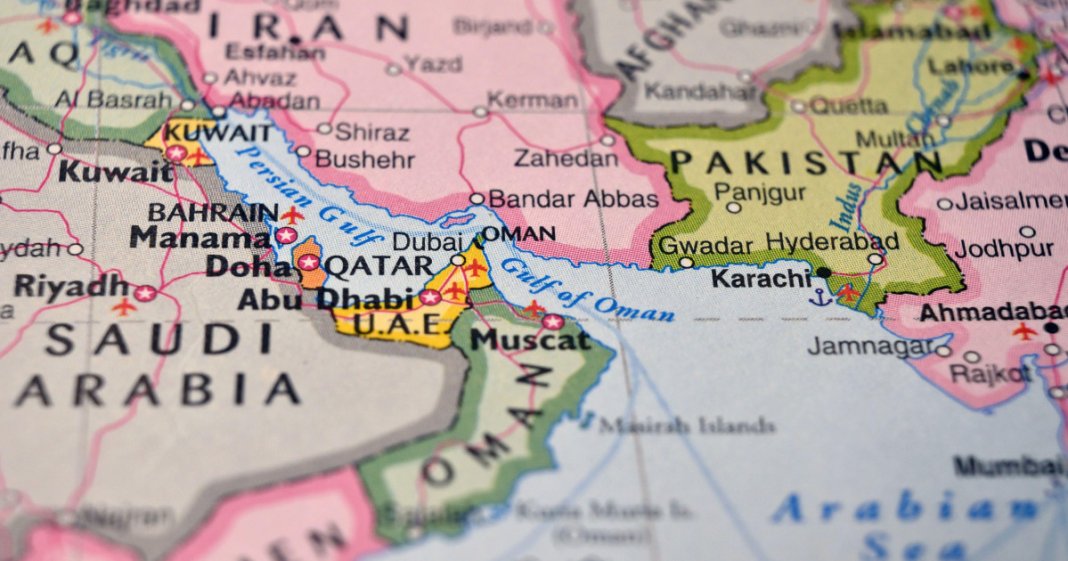

geopolitical context of the Strait of Hormuz
The Strait of Hormuz constitutes a crucial strategic point in global geopolitics, serving as one of the most significant maritime corridors for the transport of oil and natural gas. Positioned between the Persian Gulf and the Gulf of Oman, the strait is a narrow navigable passage, approximately 39 kilometers wide at its narrowest point. This strategic location transforms it into a vital control point for international energy trade.
From a geopolitical standpoint, the Strait of Hormuz is surrounded by states with divergent interests, such as Iran, the United Arab Emirates, and Oman, each having its own economic and political objectives in the region. Iran, in particular, has historically leveraged control over the strait as a bargaining chip in international negotiations, threatening to block it in the event of heightened tensions with the West.
The military presence of the United States and its allies in the region adds another complex dimension to the geopolitical context of the Strait of Hormuz. Their objective is to ensure freedom of navigation and protect the commercial interests of countries dependent on energy imports from the Middle East. At the same time, regional states, particularly those in the Gulf Cooperation Council, coordinate efforts to maintain stability and security in the area.
In conclusion, the Strait of Hormuz is not merely a maritime passage of global importance, but also a symbol of the geopolitical complexity in the Middle East, where the economic and strategic interests of major powers intersect and confront one another.
economic significance of the region
The Strait of Hormuz holds crucial economic significance, serving as a vital nod for global oil trade. Approximately 20% of oil traded worldwide passes through this strait, making it a strategic control point for energy flows. Countries in the Persian Gulf, including Saudi Arabia, Iran, the United Arab Emirates, and Kuwait, heavily rely on this maritime route for their oil exports, and any disruption in traffic through Hormuz could have significant repercussions on international energy markets.
Moreover, Hormuz also plays an essential role in the transportation of liquefied natural gas (LNG), contributing to energy supplies for key markets such as Asia and Europe. Blocking or restricting access through the strait could lead to rising energy prices globally, negatively impacting economies dependent on oil and natural gas imports.
In addition to hydrocarbons, the strait facilitates the transport of other goods, which contributes to the economic interconnection of the region with the rest of the world. In a globalized economy, the stability and accessibility of this maritime route are crucial for maintaining trade flows and ensuring global energy security.
political and military tensions
Political and military tensions surrounding the Strait of Hormuz have been intensified over the years by regional conflicts and the geopolitical ambitions of major powers. Iran, possessing a strategic position along the strait, has utilized the threat of closing it as leverage in negotiations with the West. Whenever tensions rise between Iran and the United States or its allies, the risk of military confrontation in this area becomes imminent.
In recent decades, the Strait of Hormuz has been the stage for displays of force, such as Iranian military exercises and naval patrols by the United States and other Western powers. These demonstrations aim to deter any attempts to block maritime traffic but also contribute to escalating tensions. Additionally, attacks on oil tankers in the region have been frequent, fueling uncertainty and instability.
Another complicating factor is the involvement of other states in the Middle East, pursuing their own strategic interests. Saudi Arabia and the United Arab Emirates, for instance, view Iran as a regional rival and are prepared to defend their interests through diplomatic and military means. In this context, alliances and strategic partnerships become essential for maintaining the balance of power in the region.
These tensions not only affect regional security but also have global implications, given the economic importance of the Strait of Hormuz. Any escalation of conflict could lead to significant fluctuations in energy markets and influence international relations. Therefore, managing these tensions requires a careful diplomatic approach and international commitment to prevent the outbreak of open conflict.
impact of Donald Trump’s statements
Donald Trump’s statements regarding the Strait of Hormuz have had a significant impact on the geopolitical dynamics in the region and on international energy markets. During his tenure, Trump took a strong stance against Iran, intensifying economic sanctions and adopting aggressive rhetoric that fueled tensions. His threats to „blow up” the Iranian regime were perceived as a clear signal of the United States’ intent to not tolerate Iran’s actions in the strait.
These statements generated immediate reactions in the oil markets, where prices fluctuated based on perceived security risks in the region. Any hint of instability in the Strait of Hormuz has the potential to disrupt oil supplies and drive up prices, affecting economies globally. Additionally, Trump’s bellicose rhetoric heightened the nervousness of U.S. allies in the Persian Gulf, who rely on the security of this maritime route for their hydrocarbon exports.
Diplomatically, Trump’s statements complicated efforts at mediation and de-escalation. European states, which attempted to maintain the nuclear agreement with Iran, had to navigate carefully between U.S. pressures and the desire to avoid escalating conflict. In this context, the role of the United States as the principal guarantor of security in the region has been called into question, and its allies sought to diversify their relationships and strengthen their own defensive capabilities.
In conclusion, Donald Trump’s statements have had a destabilizing effect on the Strait of Hormuz, amplifying political and economic tensions and influencing regional and international strategies. This episode underscores
Sursa articol / foto: https://news.google.com/home?hl=ro&gl=RO&ceid=RO%3Aro