
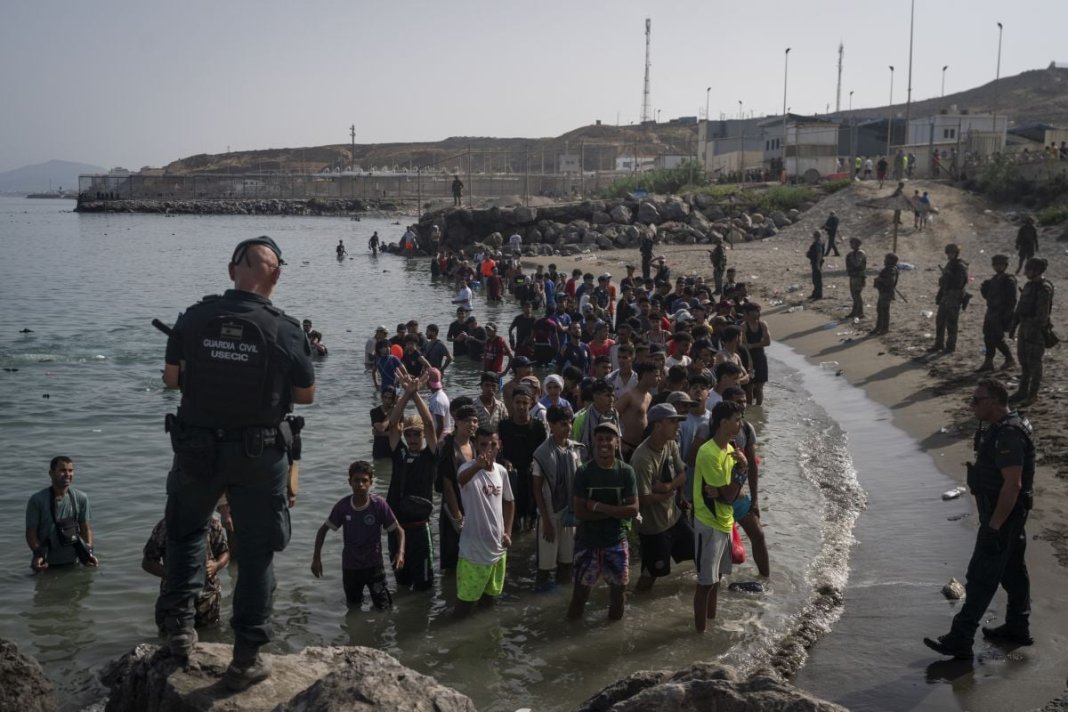

Geographical and Strategic Influence of Ceuta
Ceuta, a Spanish city located on the northern coast of Africa, plays a vital role in the migration dynamics towards Europe due to its unique geographical position. As one of the two Spanish exclaves on the African continent, alongside Melilla, Ceuta is just a few kilometers from the southern coast of Spain, separated by the Strait of Gibraltar. This proximity to Europe makes it a strategic access point for migrants attempting to reach European territory.
Its geography endows Ceuta with a significant strategic advantage, allowing control over maritime traffic through the Strait of Gibraltar, one of the busiest maritime routes in the world. This makes Ceuta a point of interest not only for the Spanish authorities but also for the European Union, within efforts to manage and control migratory flows.
Additionally, Ceuta serves as a bastion for monitoring and controlling the external borders of the European Union. The presence of security structures and advanced monitoring technologies contributes to efforts to prevent illegal migration, although challenges remain significant. The border fence surrounding Ceuta is one of the most guarded and monitored in the world, equipped with surveillance cameras, motion detectors, and regular patrols.
However, the geostrategic importance of Ceuta does not solely pertain to migration control. The city also plays an essential role in regional and international cooperation regarding security and stability in the Mediterranean region. Due to its location, Ceuta is a meeting point for various cultures and interests, adding an extra layer of complexity to the management of migration and security issues.
Policies and Migration Control Measures
The policies and measures for controlling migration implemented in Ceuta are crucial for managing the flows of people attempting to enter Europe illegally. The Spanish government, in collaboration with the European Union, has enacted a series of strict measures to ensure border security. These measures include regular patrols by law enforcement, the use of advanced surveillance technologies, and the strengthening of border infrastructure.
The fence at the border with Morocco, which surrounds Ceuta, symbolizes these efforts, equipped with modern detection systems such as long-range surveillance cameras and motion sensors. Authorities have also invested in the training of security personnel to respond effectively to crisis situations and ensure respect for human rights during migration control operations.
In addition to physical security measures, migration policy also includes bilateral agreements with the countries of origin and transit of migrants, such as Morocco. These agreements aim to cooperate in reducing illegal migration through information exchange and the organization of joint patrol operations. Additionally, initiatives are in place to promote economic development in the migrants’ regions of origin to alleviate migration pressure.
Another important aspect of migration policies is the management of reception centers for migrants. These centers are designed to provide humanitarian assistance and to assess the asylum applications of those who manage to reach Ceuta. However, conditions in these centers are often criticized by human rights organizations, which draw attention to overcrowding and lack of adequate resources.
In conclusion
Humanitarian and Social Challenges
Ceuta faces significant humanitarian and social challenges due to the constant flow of migrants arriving at its borders. The city, while technologically well-equipped to control migration, struggles to address the basic needs of migrants. Overcrowding in reception centers is one of the most pressing issues, as they are often unable to provide adequate accommodation, food, and medical assistance for the large number of people arriving here.
In addition to logistical challenges, there are social tensions among the local population, which sometimes perceives the presence of migrants as an economic and social burden. These tensions are exacerbated by cultural differences and the difficulties of integrating migrants into the local community, especially in the context of limited resources and a local economy facing its own challenges.
Non-governmental organizations play a crucial role in alleviating these humanitarian challenges, providing direct support to migrants and drawing attention to the authorities about the need to improve conditions in reception centers. However, the resources of these organizations are often insufficient to meet the growing demand for assistance.
Furthermore, human rights are frequently a subject of debate in the context of strict migration control measures. Incidents of violence at the border and the treatment of migrants by law enforcement have drawn international criticism. These aspects highlight the need for a balanced approach that combines security with respect for the fundamental rights of migrants.
Future Perspectives and Possible Solutions
In seeking sustainable solutions for the migration crisis at Ceuta’s borders, a multidimensional approach is essential, involving not only security measures but also economic and social initiatives. One future perspective lies in strengthening international and regional cooperation, both at the level of the European Union and through strategic partnerships with the countries of origin of migrants. This could include programs for economic and social development in the regions of departure, addressing the root causes of migration such as poverty and lack of job opportunities.
Another important aspect is improving conditions in reception centers and ensuring proper humanitarian management of migratory flows. This could be achieved through increased funding and the implementation of international humanitarian assistance standards. Additionally, the integration of migrants into local communities could be facilitated through education and vocational training programs, which would provide them with real opportunities to positively contribute to the local economy.
Technology could play a significant role in migration management by developing advanced monitoring and data analysis systems that prevent illegal crossings and improve coordination among different agencies involved in border control. Moreover, a rights-based approach is crucial to ensure that security measures do not violate the fundamental rights of migrants.
Ultimately, a sustainable solution may be represented by reforming asylum and migration policies at the level of the European Union, to create a fairer system for distributing responsibilities among member states. This could reduce the pressure on border points like Ceuta and ensure a more effective management of migration flows.
Sursa articol / foto: https://news.google.com/home?hl=ro&gl=RO&ceid=RO%3Aro